
Blog Post
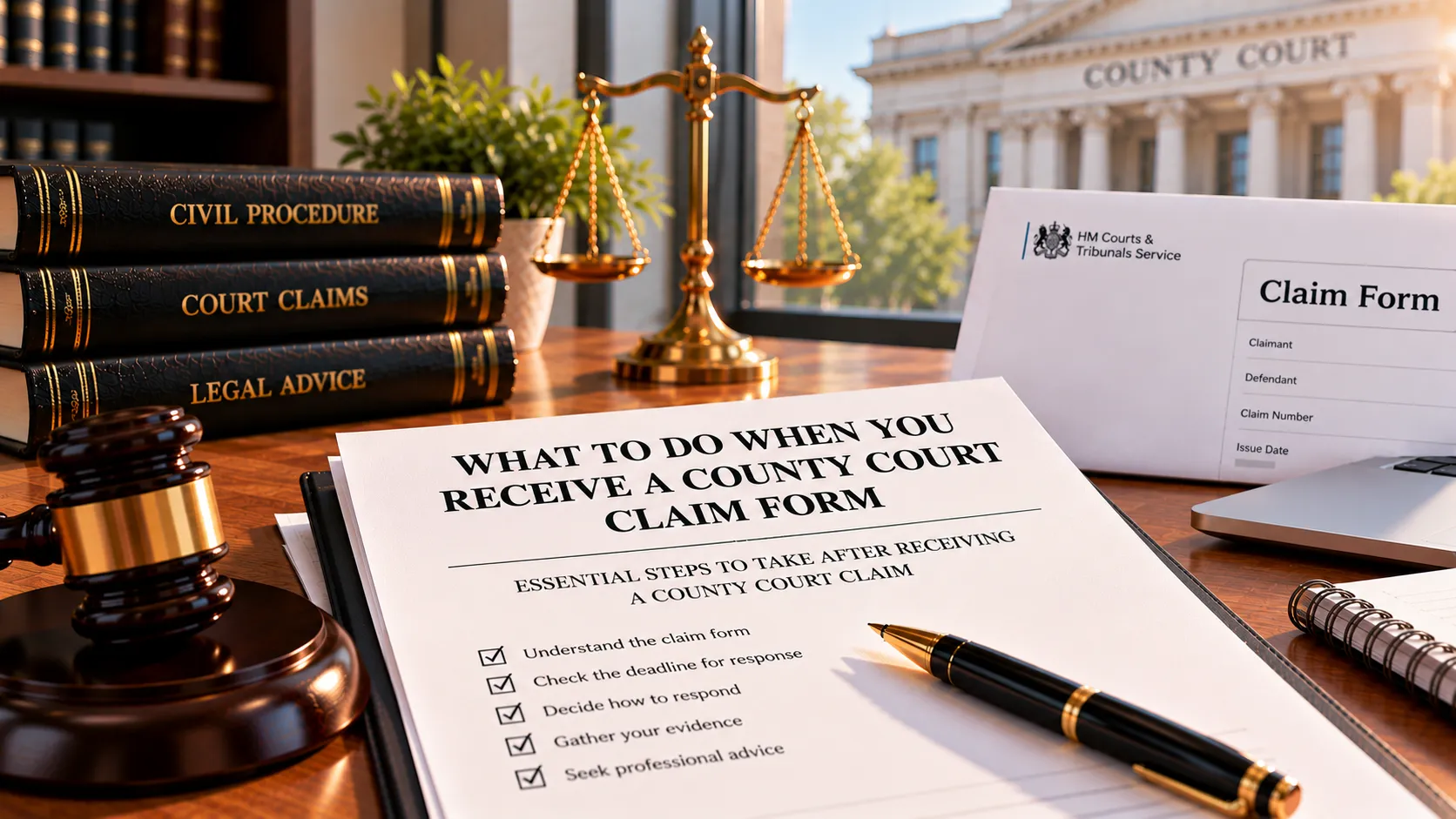
What to Do When You Receive a County Court Claim Form
What To Do When You Receive a County Court Claim
Receiving a County Court Claim can feel like being cast adrift in turbulent waters, provoking anxiety and uncertainty. Yet, understanding how to navigate this challenging situation is essential to regaining control. Whether you're facing a Claim for unpaid debts, disputes over contracts, or other legal matters, knowing your rights and options can transform this daunting experience into an opportunity for resolution. In this article, we will guide you through the essential steps to take after receiving a County Court Claim, including how to respond, what documents to gather, and tips on preparing for potential Court appearances. By arming yourself with the right information and strategies, you can effectively chart your course and move toward a successful outcome. Don't let fear dictate your actions—empower yourself with knowledge and take the first step toward reclaiming your peace of mind.
Understanding County Court Claims
Receiving a County Court Claim may initially seem overwhelming, but it is crucial to understand what it entails. A County Court Claim is a formal legal document issued by a County Court, typically involving a money-related dispute. It signifies that a person or organization, referred to as the Claimant, is taking legal action against you, the Defendant. The Claim outlines the details of the dispute, the amount of money being claimed, and the basis for the Claim. By grasping the fundamentals of a County Court Claim, you can better prepare yourself for the steps ahead.
The first thing to recognize is that a County Court Claim is not an immediate judgment against you. It is an allegation that requires a response, allowing you the opportunity to contest the Claim or negotiate a resolution. It's essential to read through the Claim Form carefully, paying close attention to the Particulars of the Claim, such as the claim amount, the reasons provided by the Claimant, and the deadlines for your response. Understanding these details is critical to formulating an appropriate and timely response.
Moreover, comprehending the implications of ignoring a County Court Claim is vital. Failing to respond within the prescribed timeframe, usually 14 days from the date of service, can lead to a Default Judgment (CCJ) being issued against you. This Judgment could result in additional costs, damage to your credit rating, and enforcement actions such as wage garnishments or property seizures. Therefore, taking the Claim seriously and acting promptly is imperative to protect your rights and interests.
The Importance of Timely Response
Timeliness is of the essence when dealing with a County Court Claim. Upon receiving the Claim, you have a limited window to acknowledge receipt and decide on your course of action. The typical deadline for acknowledging the Claim is 14 days from the date it was served. This period allows you to either accept the Claim, dispute it, or file a Counterclaim if you believe you have grounds to do so.
Accepting the Claim
If you accept the Claim or a part of the Claim then you can complete the Admission form however, please note that by filing an Admission or a Part Admission to the Claim, you are admitting to owing the balance to the Claimant and therefore, if the Claimant accepts your Admission, then a Judgment by Admission (CCJ) will be entered against you. These types of CCJs cannot be challenged or removed in most cases.
Disputing the Claim
Acknowledging the Claim within the stipulated timeframe is the first step in the process. This can be done by completing the Acknowledgment of Service form included with the Claim Pack. By doing so, you can extend the period to prepare your Defence to 28 days from the date of service. This extension is crucial as it gives you more time to gather evidence, seek legal advice, and formulate a comprehensive response.
To dispute the Claim, you will first need to complete the Acknowledgement of Service and then within 28 days from the date of service, complete the Defence. You may also file a Counterclaim against the Claimant if you so wish however, you will need to pay a Court fee for the Counterclaim to the Court. The Court fee depends on the value of your Counterclaim.
Failing to respond in time can have serious repercussions. A Default Judgment may be entered against you, meaning the Court will decide in favour of the Claimant without hearing your side of the story. This Judgment can lead to enforcement actions, such as bailiff visits, Attachment of Earnings Orders, or Charging Orders against your property. Therefore, ensuring a timely response is not just about following legal procedures but also about safeguarding your financial and personal interests.
Common Reasons for Receiving a County Court Claim
County Court Claims can arise from a variety of situations, each with its unique circumstances and legal nuances. One of the most common reasons is unpaid debts. This could include personal loans, credit card debts, or unpaid invoices for goods and services. Creditors, when unable to recover the owed amount through informal means, may resort to legal action to compel payment.
Another frequent cause for County Court Claims is disputes over contracts. These disputes can involve anything from breach of contract, delivery of substandard goods or services, to non-compliance with agreed terms. For example, if you entered into a contract to purchase goods that were never delivered, or received services that were not up to the agreed standards, the other party might file a Claim to seek redress.
Landlord-tenant disputes also commonly result in County Court Claims. Issues such as unpaid rent, property damage, service charge, ground rent or disagreements over the return of security deposits can lead landlords to take legal action against tenants. Similarly, tenants may file claims against landlords for failure to carry out necessary repairs or for unlawful eviction. Understanding the specific reason behind the Claim is essential for preparing an effective Defence.
Steps to Take Immediately Upon Receiving a Claim
The first step upon receiving a County Court Claim is to remain calm and carefully review the documents. The Claim pack typically includes the Claim Form (Form N1), a response pack, and an Acknowledgment of Service form. Read through these documents thoroughly to understand the nature of the Claim, the amount being sought, and the deadlines for your response. Take note of any specific instructions or requirements mentioned in the Claim Form.
Next, it is crucial to gather and organize all relevant documents and evidence related to the Claim. This may include contracts, receipts, correspondence, bank statements, and any other records that can support your case. Having these documents readily available will not only help you understand the Claim better but also assist in preparing your Defence or negotiating a settlement.
Once you have reviewed the Claim and gathered your evidence, the next step is to decide on your response. You have several options: you can admit to the Claim and agree to pay the amount which will result in a CCJ, dispute the Claim, and/or file a Counterclaim if you believe you have a valid case against the Claimant. Completing the Acknowledgment of Service form within the 14-day deadline is crucial, as it notifies the Court of your intention to respond and gives you additional time to prepare your Defence.
How to Prepare Your Defence
Preparing an effective Defence is a critical aspect of responding to a County Court Claim. Start by thoroughly reviewing the Claim Form and identifying the key points of contention. Consider whether you agree with the Claimant's assertions, and if not, why. Your Defence should be based on factual evidence and legal principles, so it's essential to gather all relevant documents, records, and witness statements that support your position.
Drafting a clear and concise Defence statement is the next step. This statement should address each point raised in the Claim, providing your version of events and explaining why you believe the Claim is unfounded or exaggerated. Be sure to include any evidence that supports your arguments, such as emails, contracts, receipts, or photographs. Organize your Defence logically, ensuring that it is easy to follow and understand.
In addition to preparing your written Defence, consider any potential Counterclaims you may have against the Claimant. If you believe you have suffered losses or damages as a result of the Claimant's actions, you can file a Counterclaim as part of your Defence. This can strengthen your position and potentially lead to a more favourable outcome. However, it's important to ensure that your Counterclaim is well-founded and supported by evidence.
Seeking Legal Advice: When and Why
While it is possible to represent yourself in a County Court Claim, seeking legal advice can provide valuable guidance and improve your chances of a successful outcome. Legal professionals have the expertise to navigate the complexities of the legal system and can offer tailored advice based on the specifics of your case. They can help you understand your rights, assess the strength of your Defence, and identify any potential weaknesses in the Claimant's case.
One of the key benefits of seeking legal advice is the ability to receive an objective assessment of your situation. Emotions can run high when dealing with legal disputes, and having an experienced professional review your case can provide a clearer perspective. We can help you weigh the pros and cons of different strategies, such as negotiating a settlement or proceeding to Court, and advise you on the best course of action.
Additionally, we can handle the preparation of legal documents such as a Defence, Counterclaim and a Witness Statement. This is beneficial especially where the outcome could have a substantial impact on your financial and personal well-being. Contact us by clicking here for more information.
Possible Outcomes of a County Court Claim
Once you have responded to a County Court Claim by completing your Defence, there are several possible outcomes to consider. One potential outcome is that the Claim is resolved through negotiation or mediation before reaching Court. This can be beneficial for both parties, as it allows for a mutually agreeable resolution without the need for a formal Court hearing. Negotiations can result in a settlement agreement, which may involve payment of a reduced amount or agreement on a payment plan.
If the case proceeds to Court, the outcome will depend on the evidence presented and the arguments made by both parties. The Court may rule in favour of the Claimant, resulting in a Judgment (CCJ) against you for the amount claimed, plus any additional costs and interest. Conversely, the Court may find in your favour, dismissing the Claim and/or awarding you a Counterclaim if you have filed one. In some cases, the Court may issue a split judgment, partially upholding the Claim and partially in your favour.
Another potential outcome is that the case is adjourned or postponed, giving both parties additional time to gather evidence or explore settlement options. This can occur if the Court determines that more information is needed to make a fair decision. It's important to be prepared for any of these outcomes and to remain proactive in managing your case throughout the process.
Understanding the Court Process and Timeline
Navigating the Court process involves understanding the various stages and timelines associated with a County Court Claim. After you have submitted your Acknowledgment of Service and Defence, the Court will review the documents and schedule a hearing date if necessary. The timeline for this process can vary, but it typically takes several weeks to months, depending on the complexity of the case and the Court's schedule.
Before the hearing, both parties may be required to attend a case management conference or a preliminary hearing. These meetings allow the Court to review the case, set deadlines for the submission of evidence, and address any procedural issues. It's important to be well-prepared for these conferences, as they provide an opportunity to clarify your position and ensure that all necessary documents are in order.
The hearing itself is a formal process where both parties present their evidence and arguments before a Judge. The Judge will then evaluate the evidence, consider the legal principles involved, and issue a Judgment. Depending on the nature of the case, the hearing may last from a few hours to several days. After the Judgment is issued, there may be a period for appeals if either party is dissatisfied with the outcome. Understanding the Court process and timeline can help you stay organised and focused throughout the proceedings.
Tips for Representing Yourself in Court
You can choose to represent yourself in Court, it's important to be well-prepared and confident in your approach. Start by thoroughly reviewing all the documents and evidence related to your case. Familiarise yourself with the legal principles and procedures that apply, and consider attending Court hearings as an observer to gain a better understanding of the process.
When presenting your case, clarity and organization are key. Prepare a detailed outline of your arguments, and practice presenting them in a clear and concise manner. Focus on the key points that support your Defence, and be ready to address any questions or challenges from the Judge or the Claimant's representative. Having a well-structured presentation can help you communicate your position effectively and persuasively.
Additionally, remain calm and composed throughout the proceedings. Court hearings can be stressful, but maintaining a professional demeanour can positively impact the Judge's perception of your case. Be respectful to the Judge, the Claimant, and any witnesses, and avoid letting emotions interfere with your presentation. By staying focused and prepared, you can enhance your chances of a favourable outcome.
Conclusion: Moving Forward After a County Court Claim
Dealing with a County Court Claim can be a challenging and stressful experience, but it's important to remember that it is a process that can be navigated successfully with the right approach. By understanding the nature of the Claim, responding promptly, and preparing a strong Defence, you can protect your rights and work towards a resolution. Whether you choose to seek legal advice or represent yourself, being well-prepared and informed is key to achieving a positive outcome.
Once the Claim is resolved, take the time to reflect on the experience and consider any steps you can take to prevent similar issues in the future. This may involve reviewing your financial practices, improving record-keeping, or seeking advice on legal matters before entering into agreements. Learning from the experience can help you build resilience and better manage any future disputes.
Ultimately, receiving a County Court Claim is not the end of the road but an opportunity to address and resolve a dispute. By taking proactive steps and staying informed, you can navigate the process with confidence and move forward with peace of mind. Remember, knowledge is power, and being equipped with the right information can empower you to take control of the situation and achieve a successful outcome.
If you would like further information on how we can assist in drafting your Defence, Directions Questionnaire, Witness Statement or Trial Bundle then you can contact us by clicking here and completing the enquiry form.
Need Help with Your CCJ?
Contact us today for a free case review. Our qualified paralegals are here to help.
Get Free Assessment